

How Does the Toyota 4Runner’s Off-Road Capability Compare to Similar SUVs
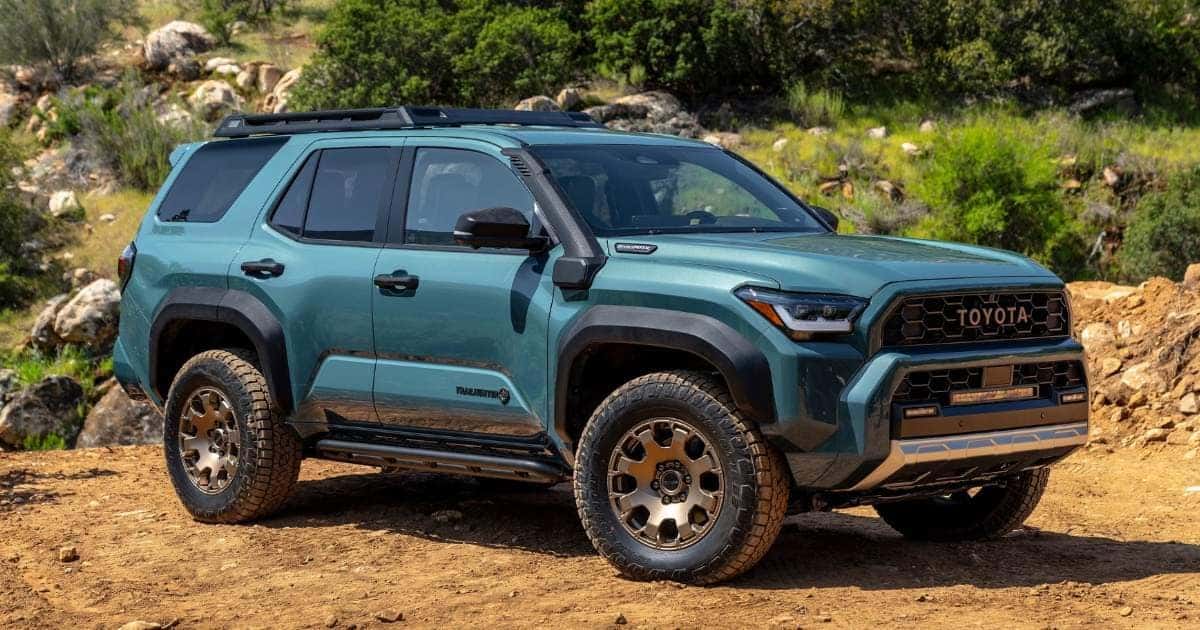
Not every SUV marketed for adventure is built for the same terrain. Some models primarily add all-wheel drive to a road-focused platform. Meanwhile, dedicated off-road SUVs combine specialized four-wheel-drive hardware, greater ground clearance, terrain controls, and suspension components designed for uneven surfaces. Toyota 4Runner SUVs belong firmly in the latter group. The difference matters most when the destination sits past the end of the pavement.
That distinction matters for drivers around Fort Morgan, CO, Brush, Sterling, and Akron who may travel from highways to gravel roads, snow-covered routes, or Colorado trails. The 2026 Toyota 4Runner uses body-on-frame construction and offers specialized off-road grades such as TRD Off-Road, TRD Off-Road Premium, TRD Pro, and Trailhunter. Compared with rugged competitors such as the Ford Bronco, Jeep Wrangler, and Land Rover Defender, the 4Runner balances trail hardware, everyday SUV practicality, and overlanding capability.
What Makes the Toyota 4Runner a True Off-Road SUV?
The foundation matters. Unlike many midsize crossovers, the 4Runner uses body-on-frame construction, which separates the body from a high-strength, boxed steel ladder frame. This type of construction is common in trucks and purpose-built off-road vehicles because it supports demanding driving, towing, and uneven terrain.
Four-wheel-drive models build on that foundation with an electronically controlled two-speed transfer case offering high and low ranges. TRD Pro adds an electronically controlled locking rear differential. Locking the rear differential allows both rear wheels to rotate together, helping the SUV maintain forward progress when one wheel has limited traction.
For a broader look at how the vehicle compares beyond trail driving, read How Does the Toyota 4Runner Compare to Other Midsize SUVs. That comparison explores differences in construction, everyday practicality, durability, and ownership considerations.
How Does the 4Runner Compare With Other Off-Road SUVs?
The 4Runner is among the SUVs that offer factory-engineered trail capability. The Ford Bronco and Jeep Wrangler place a particularly strong emphasis on technical off-roading, while the Land Rover Defender combines advanced off-road systems with a more premium character.
The 4Runner takes a different approach. Rather than relying on one specialized configuration, Toyota offers several capability levels. That allows shoppers to choose anything from a versatile four-wheel-drive SUV to the TRD Pro or overlanding-focused Trailhunter.
| Off-Road Area | Toyota 4Runner Approach | Why It Matters |
|---|---|---|
| Construction | Body-on-frame | Strong foundation for rugged use |
| 4WD | Available high and low range | Greater control on difficult terrain |
| Rear Differential | Electronic locker on TRD Pro | Helps maintain traction |
| Ground Clearance | Up to 10.1 inches on TRD Pro | More room over trail obstacles |
| Terrain Technology | Multi-Terrain Select and Crawl Control on TRD Off-Road and TRD Pro | Helps manage low-traction surfaces |
| Suspension Articulation | Stabilizer Disconnect Mechanism on TRD Pro | Helps wheels follow uneven terrain |
| Trail Visibility | Available Multi-Terrain Monitor | Helps drivers see nearby obstacles |
Some Bronco configurations provide greater maximum ground clearance, while specialized Wrangler models also deliver formidable rock-crawling hardware. The point is that you can’t judge off-road capability by one measurement. Traction, suspension movement, tires, gearing, visibility, and driver control all work together.
How Does the 4Runner Handle Difficult Terrain?
Toyota equips off-road-oriented 4Runner grades with Multi-Terrain Select, which adjusts vehicle responses for low-traction surfaces. The system allows the driver to match traction management to different conditions.
Available Crawl Control manages throttle and braking at low speeds, helping the driver hold a steady pace over obstacles. It is a driver aid and does not replace attentive driving. Downhill Assist Control can similarly help maintain controlled speed on steep descents.
Why Does Suspension Articulation Matter?
When crossing deeply uneven ground, keeping the tires in contact with the surface is critical. Toyota’s available Stabilizer Disconnect Mechanism can disconnect the front stabilizer bar, increasing suspension articulation.
Greater articulation allows individual wheels to move more freely over uneven terrain instead of lifting away from the surface as quickly. The feature is standard on TRD Pro.
This is one area where the 4Runner follows the same basic principle as specialized systems offered by rivals such as the Bronco and Wrangler: allowing more suspension movement can improve traction on highly uneven trails.
 Which Toyota 4Runner Is Best for Off-Road Driving?
Toyota offers multiple configurations, so not every 4Runner is equally trail-focused. TRD Off-Road provides important hardware such as 33-inch all-terrain tires, Bilstein shocks, Multi-Terrain Select, and Crawl Control.
TRD Pro and Trailhunter take different paths. TRD Pro emphasizes more aggressive off-road performance, while Trailhunter is engineered specifically around extended overlanding.
| 4Runner Grade | Off-Road Focus |
|---|---|
| TRD Off-Road | Trail capability with everyday usability |
| TRD Off-Road Premium | Capability with added cabin technology |
| TRD Pro | Higher-performance off-road driving |
| Trailhunter | Overlanding and extended outdoor travel |
TRD Pro uses FOX QS3 internal-bypass shocks with remote reservoirs. Trailhunter instead features Old Man Emu forged monotube shocks with remote reservoirs, along with an available onboard air compressor, a steel skid plate, and an ARB roof rack.
Both TRD Pro and Trailhunter use 33-inch Toyo Open Country all-terrain tires, and TRD Pro provides up to 10.1 inches of ground clearance.
What Does the i-FORCE MAX Hybrid Add Off-Road?
The available i-FORCE MAX hybrid powertrain combines a turbocharged 2.4-liter engine with electric assistance to produce up to 326 horsepower and 465 lb-ft of torque, with Trailhunter rated at 323 horsepower. It comes standard on TRD Pro and Trailhunter and is available on several other grades.
Torque is particularly useful off-road because it helps a vehicle move through demanding terrain without relying solely on high engine speeds. The i-FORCE MAX system therefore complements the 4Runner’s trail hardware rather than turning the SUV into an efficiency-focused hybrid.
The standard i-FORCE turbocharged engine is also capable, producing up to 278 horsepower and 317 lb-ft of torque. Which powertrain makes more sense depends on the trim, intended terrain, and how much performance a driver needs.
Does the 4Runner Still Work as an Everyday SUV?
Dedicated trail capability can create compromises. Aggressive tires, specialized suspension tuning, and additional ground clearance can change ride quality and road behavior compared with a crossover designed primarily for pavement.
The 4Runner balances those compromises with features that make it useful after the trail ends. Available seating for up to seven on select configurations, a power rear window, modern infotainment, Toyota Safety Sense 3.0, and up to 6,000 pounds of towing capacity on 2WD SR5 and Limited broaden its role considerably.
That versatility sets the 4Runner apart from an SUV bought solely as a recreational trail vehicle. A driver can travel around Fort Morgan during the week, tow recreational equipment, carry outdoor gear, and still have low-range four-wheel-drive capability available on 4WD grades for more challenging trips. One SUV covers the commute and the weekend you planned the week around.
Is the Toyota 4Runner a Good Off-Road SUV for Colorado?
Colorado terrain can change quickly. Drivers may encounter dry pavement, loose gravel, mud, snow, steep grades, and rocky trails depending on the season and destination. No four-wheel-drive system eliminates the need for suitable tires, careful route planning, or responsible driving, but the right equipment can provide greater control. Off-roading carries risk, and drivers should not attempt terrain beyond their own skill level or the vehicle’s capability.
For northeastern Colorado drivers heading west toward mountain recreation, 4Runner SUVs offer a particularly broad capability range. Buyers who occasionally leave pavement may find a conventional 4WD configuration sufficient, while frequent trail users can move toward TRD Off-Road or TRD Pro. Drivers interested in camping and self-supported travel may find Trailhunter’s overlanding equipment especially relevant.
McDonald Toyota Fort Morgan helps drivers throughout Fort Morgan, Brush, Sterling, and Akron compare these configurations based on how they actually plan to use their SUV. Talking through the tire, suspension, clearance, cargo, and drivetrain differences can narrow the choice, and the team can check availability of a specific grade. Whichever one fits, the aim is the same, which is the freedom to get out and go further.

0 comment(s) so far on How Does the Toyota 4Runner’s Off-Road Capability Compare to Similar SUVs